
Sexual Offense Defense Attorneys
We defend accused persons in sexual-autonomy cases, including forcible sexual intercourse and forcible indecency. The team helps preserve messages and interaction records and attends interviews from the first police questioning.
Consent Defense and Evidence Preservation
These cases often turn on conflicting accounts. Messages, interaction history, and consistency of statements are decisive. Do not contact the complainant privately; all communication or settlement should go through counsel.
Common Sexual-Offense Charges and Defense Strategy
The line between forcible indecency and sexual-harassment offenses greatly affects sentencing. If you are accused, consult defense counsel early to reduce the risk of new charges or detention during the investigation.
Sexual Offense Defense FAQ
I am accused of sexual assault but the encounter was consensual — how do I protect myself?
Immediately preserve messages and records of your interactions that show consent, and have a lawyer present from the first police interview. These cases often come down to conflicting accounts, so consistency of statements and corroborating evidence are decisive.
What should I be careful about during a sexual offense investigation?
Never contact the complainant privately — it can create new charges or be seen as witness tampering and lead to detention. All contact, apologies, or settlement talks should go through your lawyer.
What is the difference between indecent assault and sexual harassment?
Forcible indecency is a serious Criminal Code offense committed against a person's will, while offenses under the Sexual Harassment Prevention Act carry lighter penalties. The line between them is a frequent focus of the defense and greatly affects sentencing.
Related Case Results
Selected results from our Sexual Offense Defense
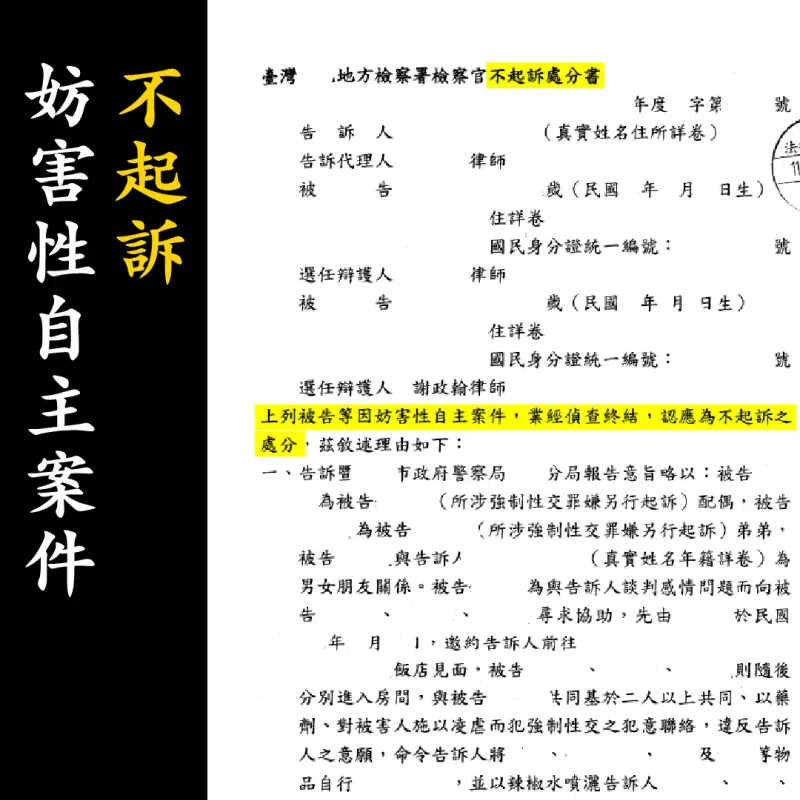
Decision of Non-Prosecution (personal data redacted)
Under the non-prosecution (不起訴) decision caption «Sexual autonomy offense», we defended against forcible sexual intercourse allegations; investigation closed with a non-prosecution (不起訴) decision.
Handling attorney:謝政翰
Need help from our Sexual Offense Defense?
Contact our team now for a solution tailored to your situation